ANN1000
ANN1000 targets edge computation with event-driven signal propagation. It is ideal for ultra-low-power, low-latency inference and direct communication with local data collectors such as cameras.

The global volume of data and rapid growth of AI are driving unprecedented demand for compute power. Conventional digital computing is approaching practical limits in throughput, latency, and power consumption, while data movement and memory bandwidth constrain modern AI models. SEMIQA addresses this challenge with an Analog Neural Network technology inspired by the human brain, significantly reducing energy consumption while improving performance.
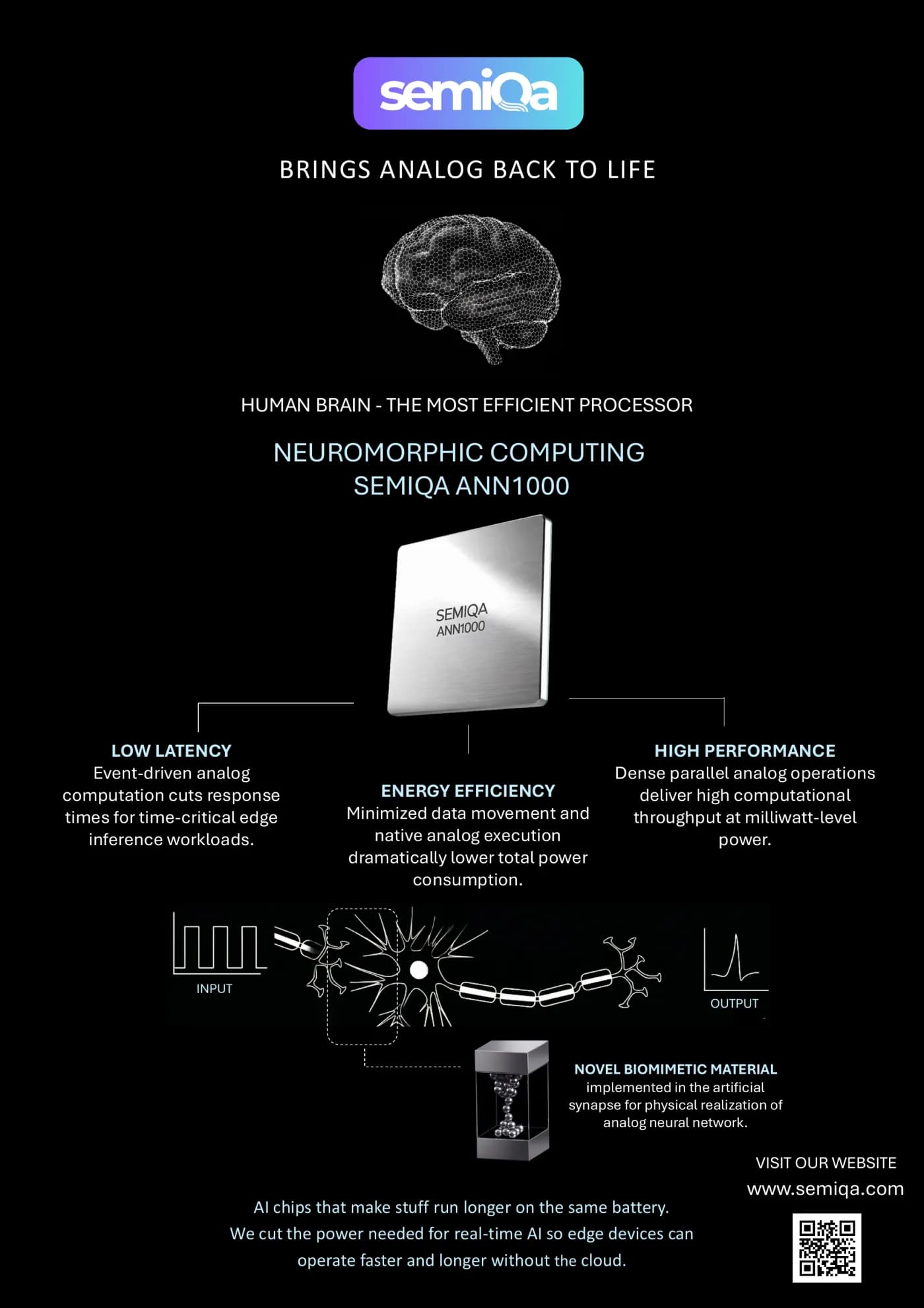
Low Latency
Event-driven analog computation cuts response times for time-critical edge inference.
Energy Efficiency
Minimized data movement and native analog execution dramatically lower total power consumption.
High Performance
Dense parallel analog operations deliver high throughput at milliwatt-level power.
SEMIQA develops two licensable ANN IP cores for external vendors. Both use CMOS-compatible neuromorphic technology and are optimized for production deployment.
ANN1000 focuses on edge intelligence where ultra-low power and low latency are critical. ANN2000 is tailored for cloud-scale workloads and demanding datacenter bandwidth.
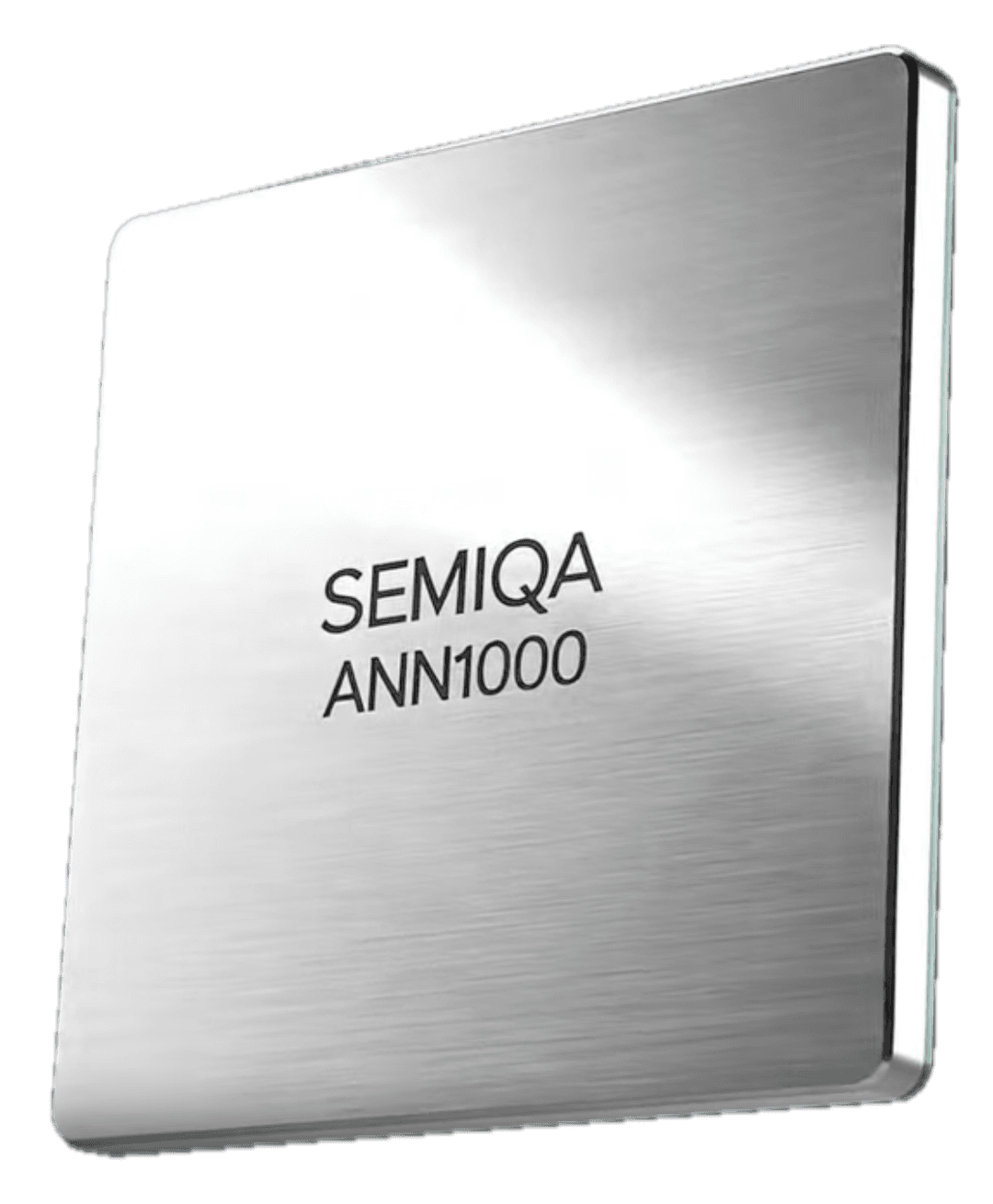
ANN1000 targets edge computation with event-driven signal propagation. It is ideal for ultra-low-power, low-latency inference and direct communication with local data collectors such as cameras.
ANN2000 is designed for datacenter integration. Its neuromorphic approach significantly reduces power use while delivering greater efficiency than conventional architectures.
Our Process Design Kit enables foundry partners and design teams to integrate SEMIQA's analog neural network into their chip designs.
The PDK includes verified cell libraries, simulation models, and layout rules optimized for our novel analog materials.
Our Software Development Kit provides a straightforward workflow for deploying AI models on our hardware.
Our compiler automatically converts floating-point models into optimized integer representations.